
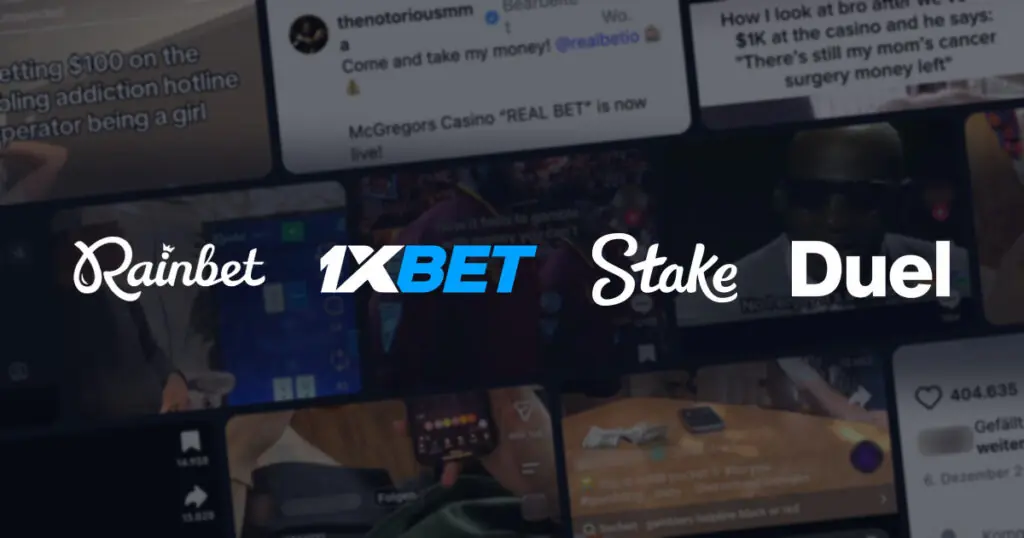
I showed my girlfriend and my mother eight logos: Stake, Rainbet, Kick, Roobet, Duel, Realbet, 1xBet and 1win. Neither of them has ever gambled, and neither has anything to do with this world.
My girlfriend knew the name Rainbet, and the logos of Stake, Kick, Duel and 1win looked familiar to her. She could not say exactly where from. Instagram, probably. They just felt familiar. My mother reads the newspaper, watches TV and reads magazines, online too. She just isn’t on social media. She did not recognise a single logo and had never seen any of them.
Five to nil. Same city, two different worlds.
I wanted to show how that is possible. So over the past few weeks I collected every place where online casinos found me. Squeezed into a single day, it looks something like this.
A bit of context first. My colleague Jonathan Rinner and I are 20. We belong to the first generation to grow up with online casinos in the feed, that endless stream of videos and pictures on Instagram, TikTok, Snapchat and the rest. For us it is everyday life. For most older adults this world simply does not exist, because their feed looks different or because they are not on these platforms at all.
I am not talking about licensed, regulated casinos. I mean operators with a licence from Curaçao, the Caribbean island most people know from the blue liqueur. It is known for loose rules and cheap licences.
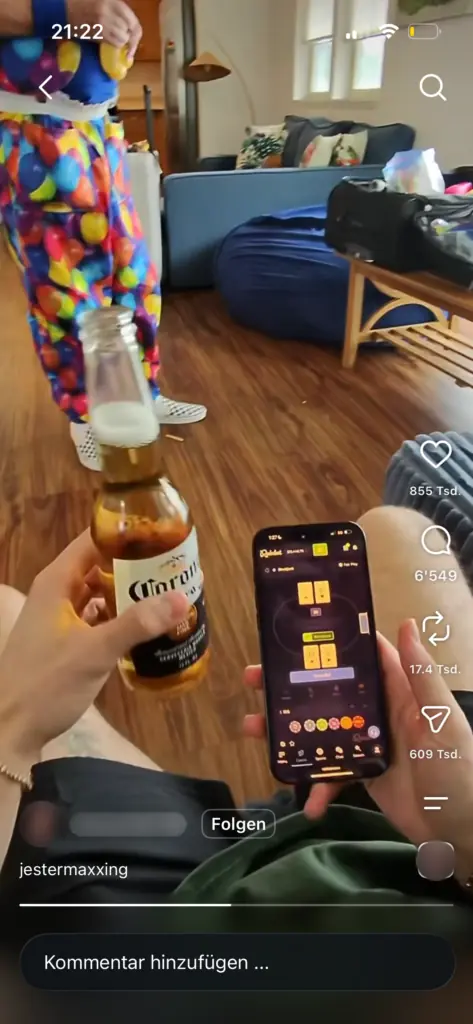
The first encounter comes before I am even out of bed. Instagram, one video after another. A young man films a funny clip with a pair of camera glasses. Halfway through, he pulls out his phone and plays a quick hand of blackjack. On the screen you can see it is Rainbet, then the video carries on as if nothing had happened. If you are used to this kind of video, you barely notice.
Is that an advert? It is not labelled as one. How this kind of covert advertising works would be worth a piece of its own. I make the first mark on my tally.
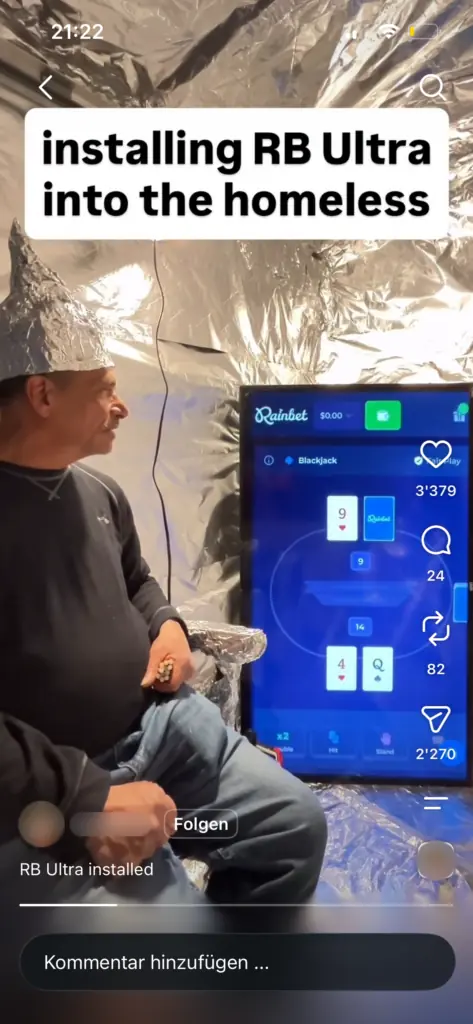
The next video is of the same kind, only grimmer. A man invites homeless people into his van and takes advantage of their apparently befuddled state for his video. It is all filmed with camera glasses. For a moment, a hand of blackjack on Rainbet flashes up on the TV in the van. Millions of views, hundreds of thousands of likes, and plenty of people in the comments laughing at how absurd it is. Second mark.
Two videos later it gets less subtle. Drake, one of the most successful musicians in the world, 139 million followers. That is roughly as many people as live in the UK and France combined. Of his last twenty Reels (short videos), thirteen show the crypto casino Stake or promote it. The casino is linked in his bio, and the only Story Highlight pinned to the top of his profile has the Stake logo as its cover.
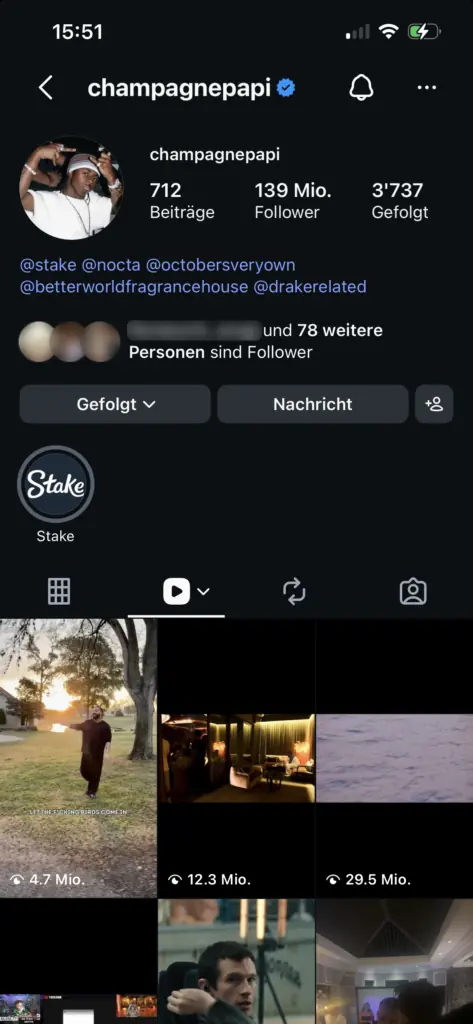
I do not have to look for Drake. He finds me. Third mark.
In between, almost refreshing: a perfectly ordinary casino ad, labelled as an ad. At least it admits what it is. Fourth mark.
At lunchtime I am on TikTok. Casino advertising is heavily restricted there, so in theory it should be quiet. Instead, there is a meme of basketball star LeBron James just before one of the biggest games of his career. The caption reads: “How it feels to gamble with money you can’t afford to lose”. LeBron James has nothing to do with any casino. He does not need to. Two videos later, a group of young people act out a sketch titled “betting 100 dollars on the gambling addiction hotline operator being a girl”.
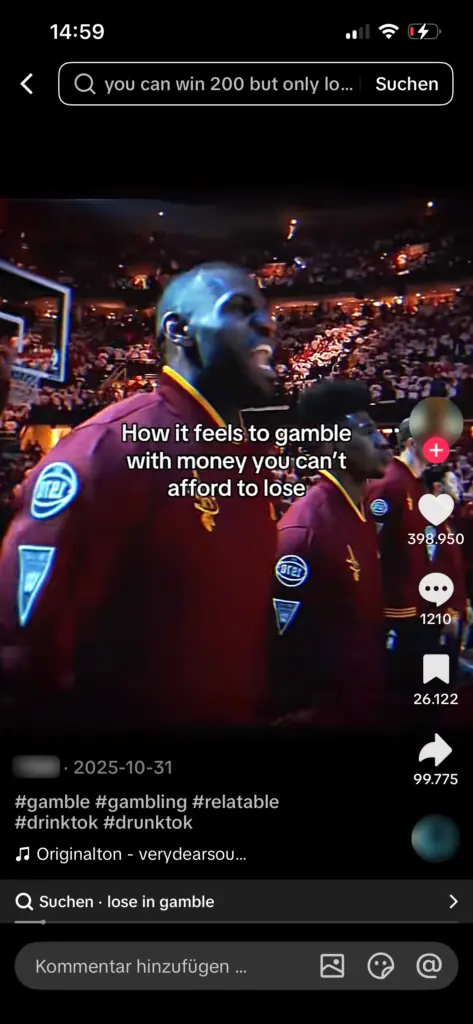
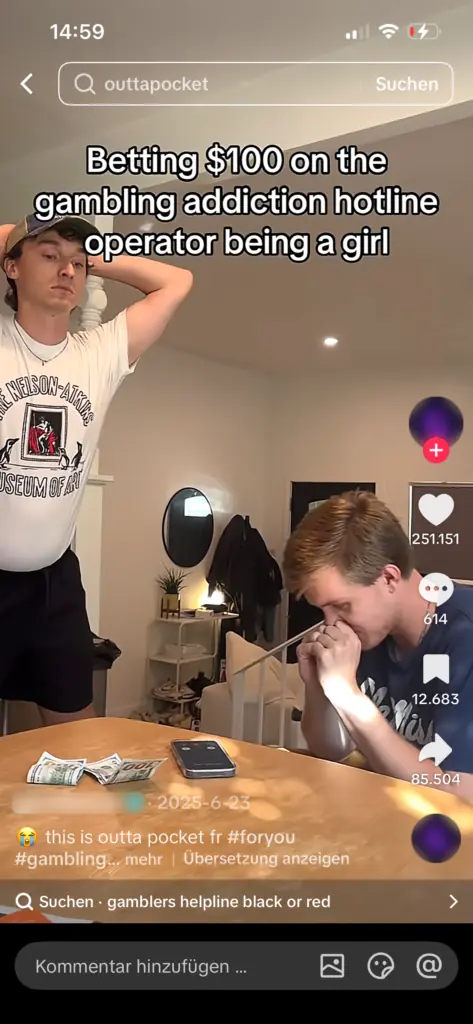
I do not make a mark, there is no casino in sight. But I remember the videos. What they laugh about is precisely the dark side of gambling: the addiction, the losses, the money that was meant for something else.
Then a friend sends me a post from X, formerly Twitter. It is about the PlayStation: apparently around half of all players are still on the old PlayStation 4. Nothing to do with gambling. Down at the bottom of the picture, small, like a watermark, sits the Stake logo. We laugh. Stake probably does too.
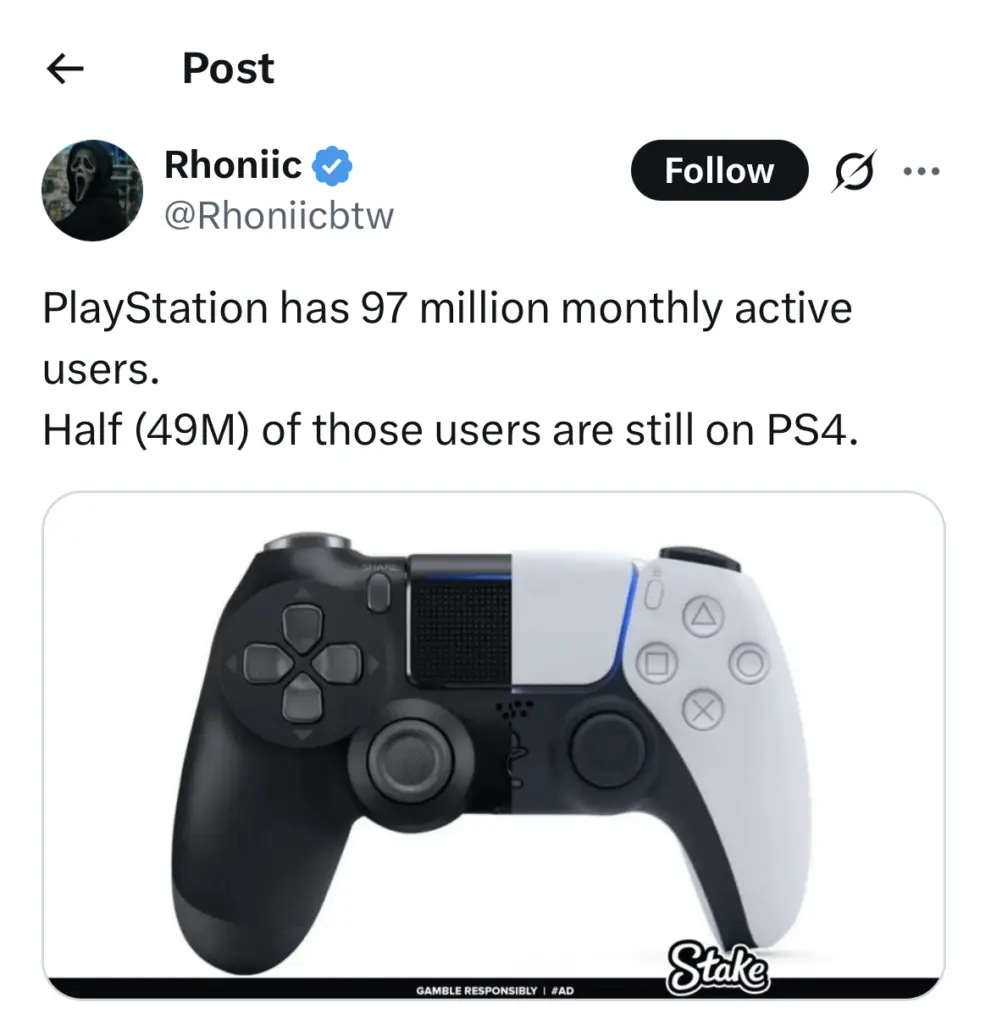
That is no accident. Some of these operators deliberately spread pictures, memes and videos carrying their logo. Duel, for instance, advertises itself as “the first casino that gives a f*ck”. A meme that young people forward to each other of their own accord is the cheapest advertising in the world. The casinos do not even have to distribute it themselves. Fifth mark.
In the afternoon there is football on, Premier League. Since this season, clubs no longer carry betting firms on the front of their shirts, a ban they agreed on themselves. You would think that here, at least, things would be quiet. Not quite.
Researchers at the University of Bristol counted the first matches of the season. The ban cut gambling advertising during live broadcasts by a mere 10.5%. Advertising on sleeves and training kit rose by 362%. In Newcastle against Liverpool alone they counted 2,702 gambling messages, more than twelve a minute. The casinos and bookmakers have not gone anywhere. They have simply moved a few centimetres to the side. Elsewhere, nobody even bothers: FC Barcelona extended its deal with 1xBet in 2024 until 2029, and Chelsea has Roobet as a betting partner for South America. Sixth mark.
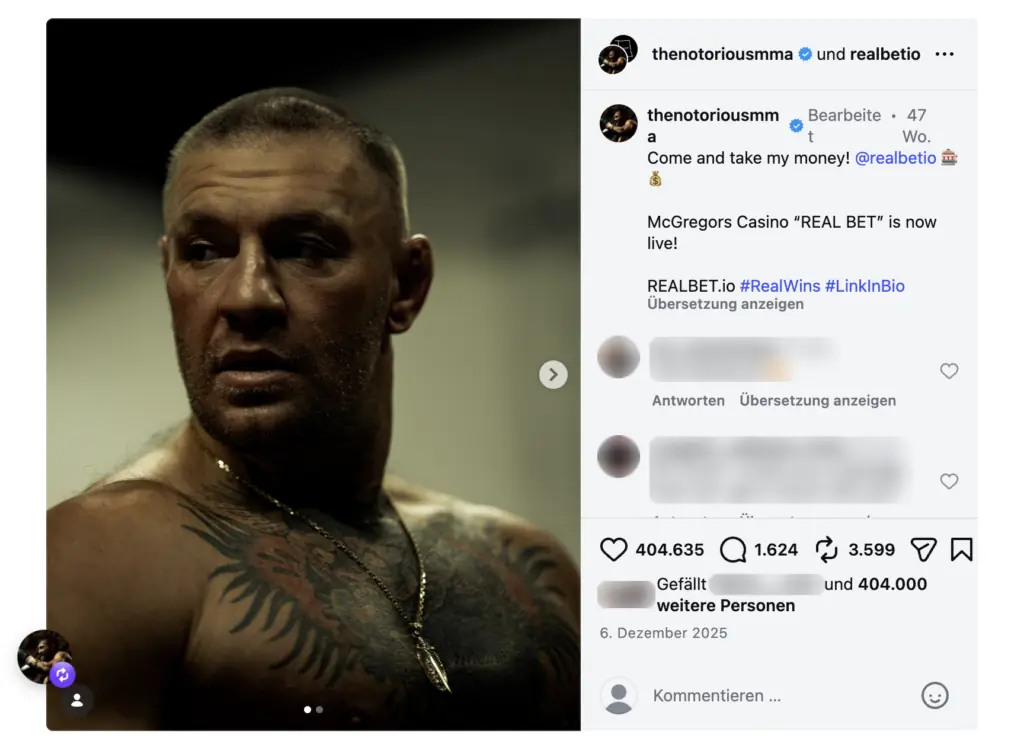
In combat sports, casinos have become almost part of the kit. In the summer of 2026 alone, three UFC stars signed with the crypto casino Rainbet within three months: Justin Gaethje in July, Sean Strickland in August and champion Joshua Van in September. Outside their scene, hardly anyone knows them. Inside it, they are heroes. Conor McGregor, the most famous fighter in the world, has gone one step further. He does not just promote a casino, he owns one: since December 2025 he has been co-owner and face of the online casino Realbet. Since 2026 he has also been an ambassador for the bookmaker 1xBet. And boxing superstar Canelo Álvarez has been promoting the casino and betting brand 1win since 2025.
Seventh mark. And in Formula 1, Stake showed how to deal with an advertising ban. In 2023, its logo was not allowed on the car in Australia, Spain, Belgium and Qatar because of local gambling laws. So the car carried a different name instead: “Kick”. What that name means, I will find out tonight.
By evening, there are already seven marks on my tally.
A casino with its own TV channel
In the evening I want to switch off and watch a livestream. For anyone unfamiliar: a streamer broadcasts live, often for hours, while thousands watch them game, chat or play at an online casino. Tonight the streamer Adin Ross and xQc are sitting together at a blackjack table, a real one with cards and chips, in a private game. No online casino, no logo in shot. Still, it is not as harmless as it looks: the two are among the best-paid streamers in the world, and the stream is running on a platform called Kick.
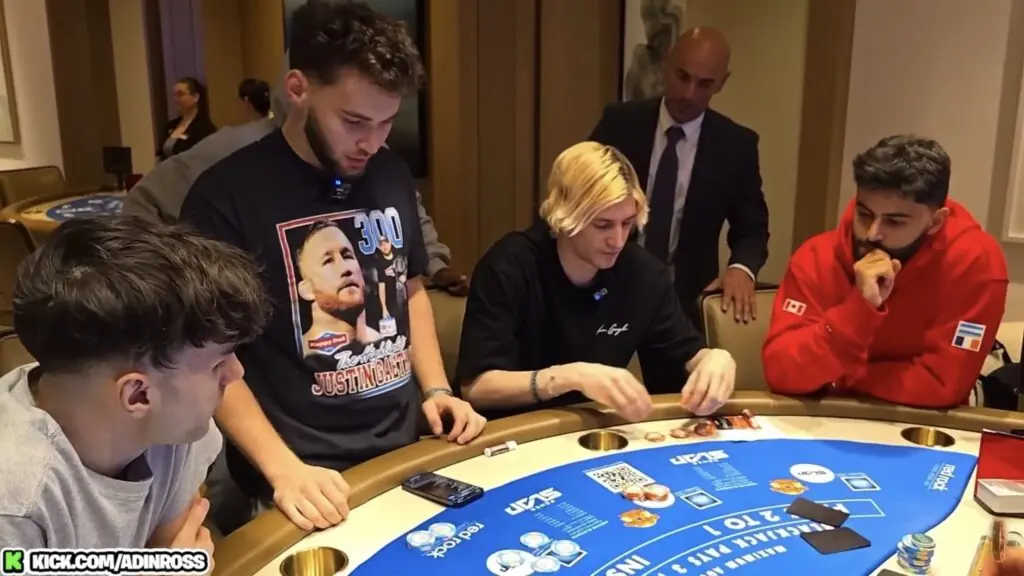
These names would mean nothing to my mother, and she would not be alone. Outside their scene, hardly anyone knows them. Inside it, they are superstars: on Kick alone, Adin Ross has 2.8 million followers, more people than live in Paris. xQc has around 1.3 million there.
Why casinos feel so at home in livestreams goes back a few years. Until 2022, Twitch was the most important platform for livestreaming, with a good three quarters of all hours watched live on the big gaming platforms. For my generation, Twitch was what television was for older ones. In autumn 2022, Twitch pulled the emergency brake and banned casino streams from operators without a US licence. Stake was one of them.
Imagine the BBC banning casino adverts, and the casino responding by simply launching its own TV channel. That is exactly what happened. In December 2022, about two months after the ban, Kick went live. It was founded by Ed Craven and Bijan Tehrani, the two founders of Stake. They had met as teenagers in the online game RuneScape, where they let other players bet in-game gold, until the game’s makers apparently threw them out. Today both are billionaires, according to Forbes, and Kick shares its Melbourne headquarters with Stake.
To lure Twitch’s stars away, Kick promised streamers they could keep 95% of their subscription revenue. On Twitch it was 50%. In 2023, the Canadian streamer xQc signed a deal worth $70 million over two years, with bonuses of up to $100 million. Adin Ross, one of the best-known American streamers, says he received $100 million in 2025 for moving to the crypto casino Rainbet. According to the analytics firm Streams Charts, Kick ranked fourth among livestreaming platforms in the third quarter of 2025, behind YouTube, TikTok and Twitch.
Forbes estimated in 2024 that Kick loses several million dollars a month doing all this. Why would a casino run a channel that loses money? I will leave that answer to you. Eighth mark, and a thick one.
Before bed I want to watch something serious, say “Inside the Manosphere” on Netflix, Louis Theroux’s documentary about the world of so-called masculinity influencers. A critical investigation, just the thing after a day like this.
But as the Australian trade magazine Mediaweek has already pointed out, the Rainbet logo appears on screen several times there too, and Stake makes a brief appearance. Rainbet is a crypto casino founded only in 2023 that looks like a copy of Stake and recorded almost 13 million visits in February 2026. There is no known link between the casinos and Netflix. The logos are simply there, because in this world they are everywhere.
So you cannot even inform yourself critically about this scene without seeing its advertising. Ninth and final mark of the day.
Not a single cent
At the end of the day there are nine marks on my tally, and I only counted the most obvious ones. I did not bet a single cent. The casino played anyway, with my attention.
And that is only what crossed my own path. Go looking, and there is no end to it. The ATP Challenger Tour, the second tier of men’s professional tennis, has had an official betting partner since 2025: 1xBet, across more than 30 tournaments. Esports teams such as OG and Team Spirit carry the same logo. Even rap legend Snoop Dogg has been “Chief Ganjaroo” of the crypto casino Roobet since 2023. There is hardly a sport, a stage or a platform left without a casino on it.
And those are only the so-called reputable operators, companies with a licence, a logo and sponsorship deals. On the same platforms, outright fraud runs alongside them. In 2024, Instagram showed paid adverts for a supposed MrBeast casino app, built with deepfakes, artificially generated videos of famous faces. The app did not exist, and MrBeast had nothing to do with it. Yet where reputable ends and disreputable begins is far from clear. 1xBet, FC Barcelona’s partner, lost its licence in Great Britain, and international arrest warrants have been issued for its three founders. Barcelona extended the deal until 2029 regardless.
Only in the evening did I understand what my marks stand for. They stand for three kinds of normalisation. The first is the logo: see Stake or Rainbet every day and the names end up feeling as familiar as Coca-Cola. The second is gambling itself. Casino adverts used to live in the seedy corners of the internet, as pop-ups on piracy sites where you streamed films semi-legally. Today a global star plays a round between two songs in front of 139 million followers. The third is the most insidious, because it is about the dark side. In the memes, addiction becomes the punchline. Two friends have lost $1,000 at the casino, and one of them points out that his mother’s cancer surgery money is still left. Again, hundreds of thousands of likes.
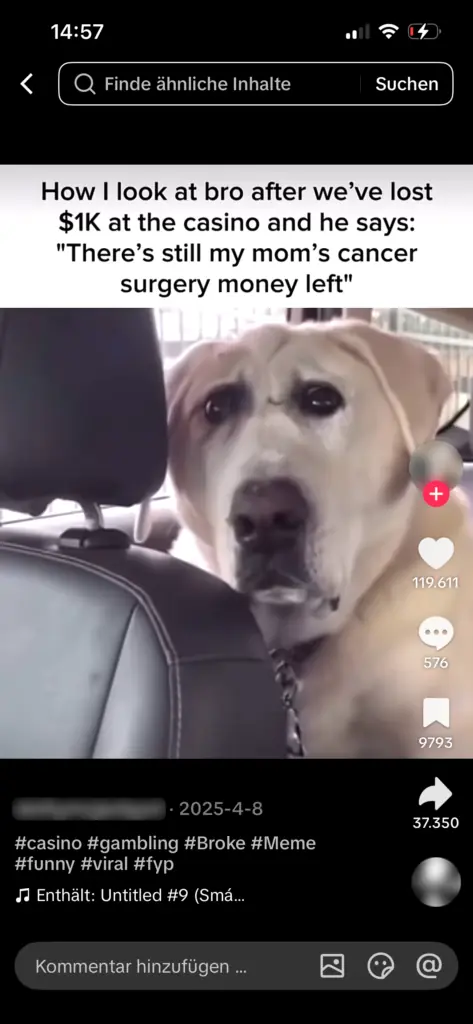
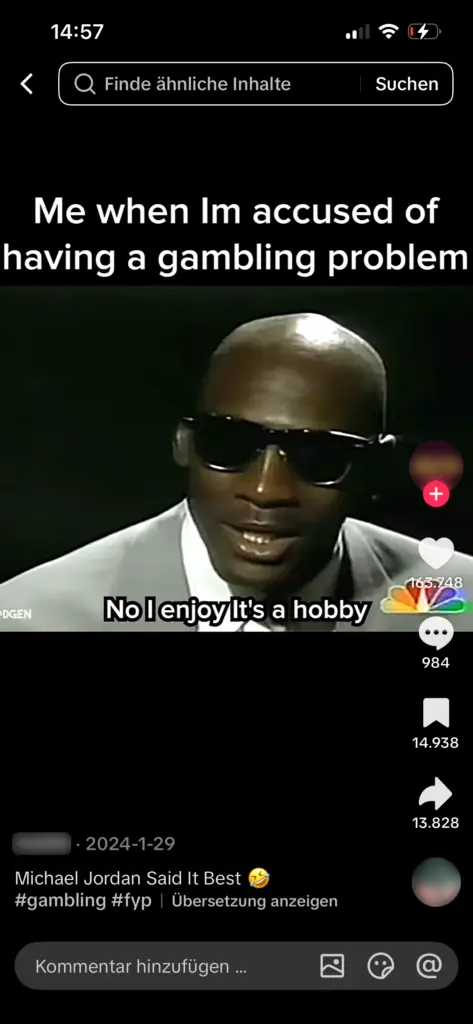
The hotline becomes a joke and losing becomes a feeling you share with LeBron James. Perhaps one of these memes made you smile too. That is exactly the problem. Behind all these jokes lies the same attitude: life is not to be taken seriously anyway, so why worry about the money? Laugh at it often enough and at some point you stop taking the losses seriously.
And the casinos can afford all of this. According to Forbes, Stake took in $2.6 billion in a single year. All of Switzerland’s casinos together, land-based and online, made CHF 878 million in 2025. A single campaign by the crypto casino Duelbits with UFC fighter Justin Gaethje reached more than 122 million video views.
In many countries, advertising unlicensed gambling is illegal. In Switzerland, where I live, it can mean fines of up to CHF 500,000, and the federal gaming regulator had blocked around 2,600 casino websites by the end of August 2025. But the feed knows no borders. A Drake video looks exactly the same in Zurich as it does in London or Toronto, and no blocklist can stop a meme in a group chat.
It is not just my feed, as our survey at Zurich upper secondary schools (in German) from summer 2026 shows. Of the 1,102 students who took part, 76% had seen adverts for online casinos or sports betting in the previous 30 days, 57% on Instagram, TikTok or YouTube. The survey is not representative, but it shows the direction. So my conclusion after this day is simple: there is no escaping gambling any more.
In Switzerland, anyone who wants to walk into a casino has to show ID at the door. Staff check that you are an adult and that you are not on the self-exclusion list. In the feed, nobody asks for ID. There, the casino video sits between your best friend’s birthday video and the next meme. If you are 15 today, you will run into these casinos even if you never play. My girlfriend is the best proof of that.
Try a little test. Tonight, ask your child, your godchild or your granddaughter whether they know Stake. Then ask them where from.
That all these videos reach young people who never watch a livestream is no accident, by the way. Behind it is a system called clipping. That is what the next part of this series is about.
This is an opinion piece and reflects the author’s personal views. Casinorating earns money partly through partnerships with online casinos licensed in Switzerland. It has no partnerships with any of the operators named in this piece.